Home
[ HERO — final detail page · desktop + mobile · full-bleed 5:2 · 2880×1152 ]

Making 6-way pricing easy to choose

Redesigning a product detail page to stop drop-off and make a 6-option pricing system scannable. For a legal e-book subscription service, on desktop.

Role
Product Designer
1 of 3 designers
Timeline
July 2023
1 month · Shipped
Company
Atta Systems
Biblioteca Hamangiu
Skills
Competitive research
Information architecture
Interaction & visual design
Impact

As the product designer, I turned a hidden 6-way pricing system into one scannable CTA, cutting the path to purchase in half.

−50%
clicks to buy
4 → 2
0 pages
to leave to buy
was 4
Shipped
live on desktop
The Problem

Users left the detail page without buying

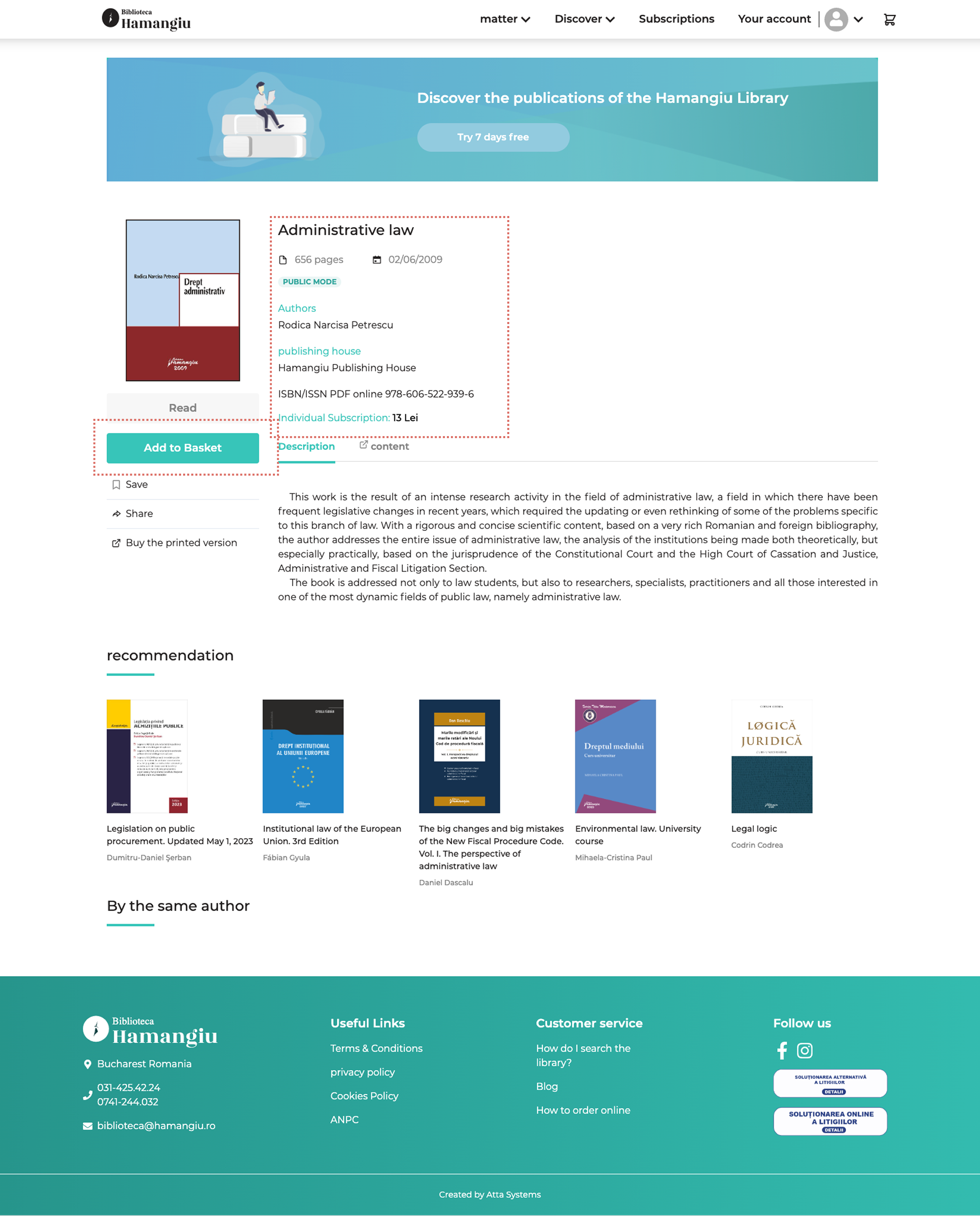
One flat “Add to Basket” hid a 6-way pricing system. It sat behind too many clicks and too little info to decide with.
Too many clicks
4+ clicks just to view modules and pricing.
as-is → path to price
Home
“how much is it?”
“what is a subscription?”
Module area
select module
Module page
Price
Subscription
Subscription information
Buy subscription
Too little info
No format, language, or module info to decide with.
Options hidden
One flat “Add to Basket” hid a 6-way pricing system.
[ desktop — as-is detail page, annotated · ~3:2 ]
Research

How might we let users decide whether to subscribe at a glance, right on the detail page?

Competitive research

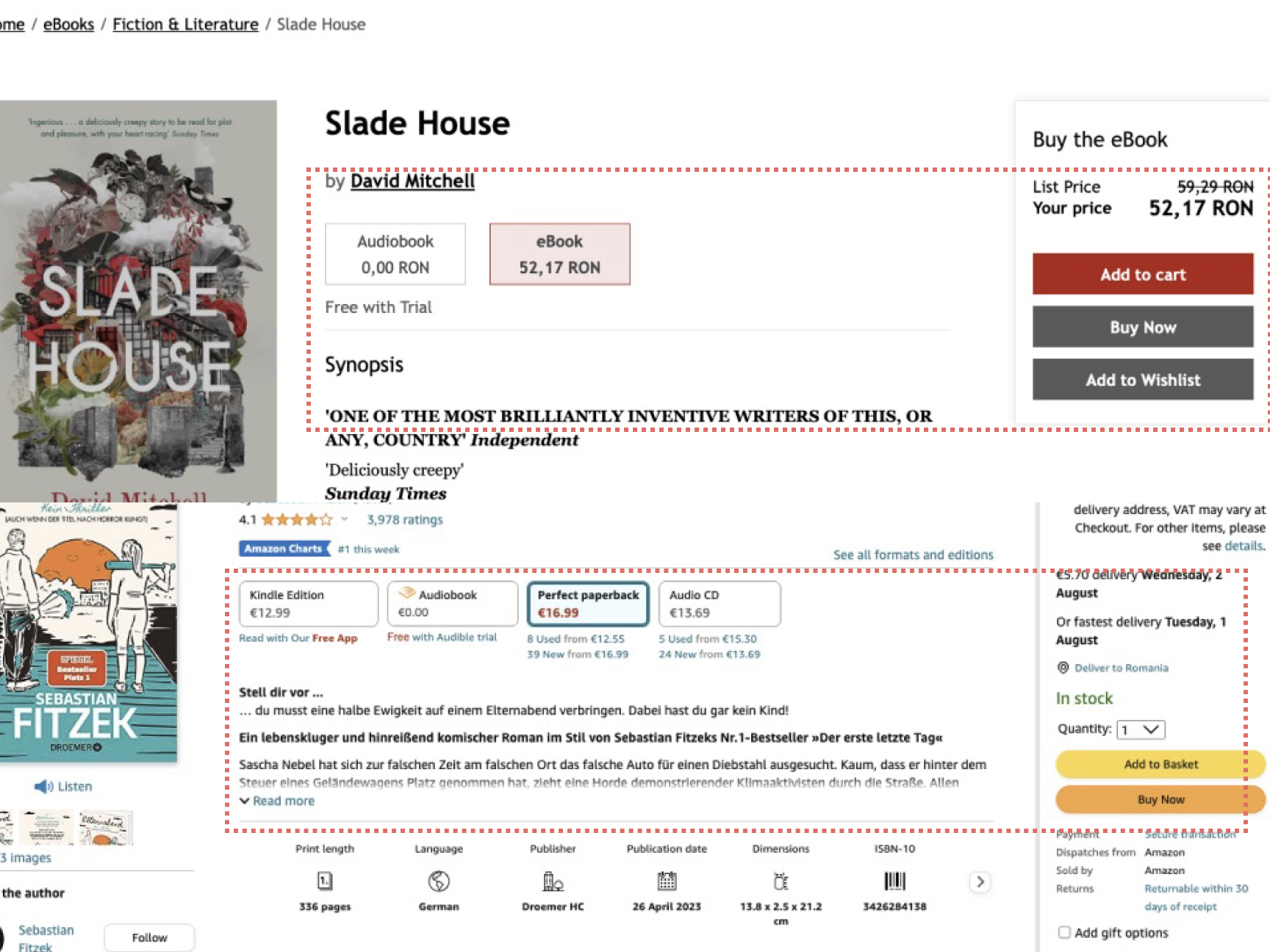
With no users to interview, I looked at how others solve this. I compared layout and CTA structure across 10+ e-book services to find the patterns buyers expect, and where our page fell short.
Key insights
01
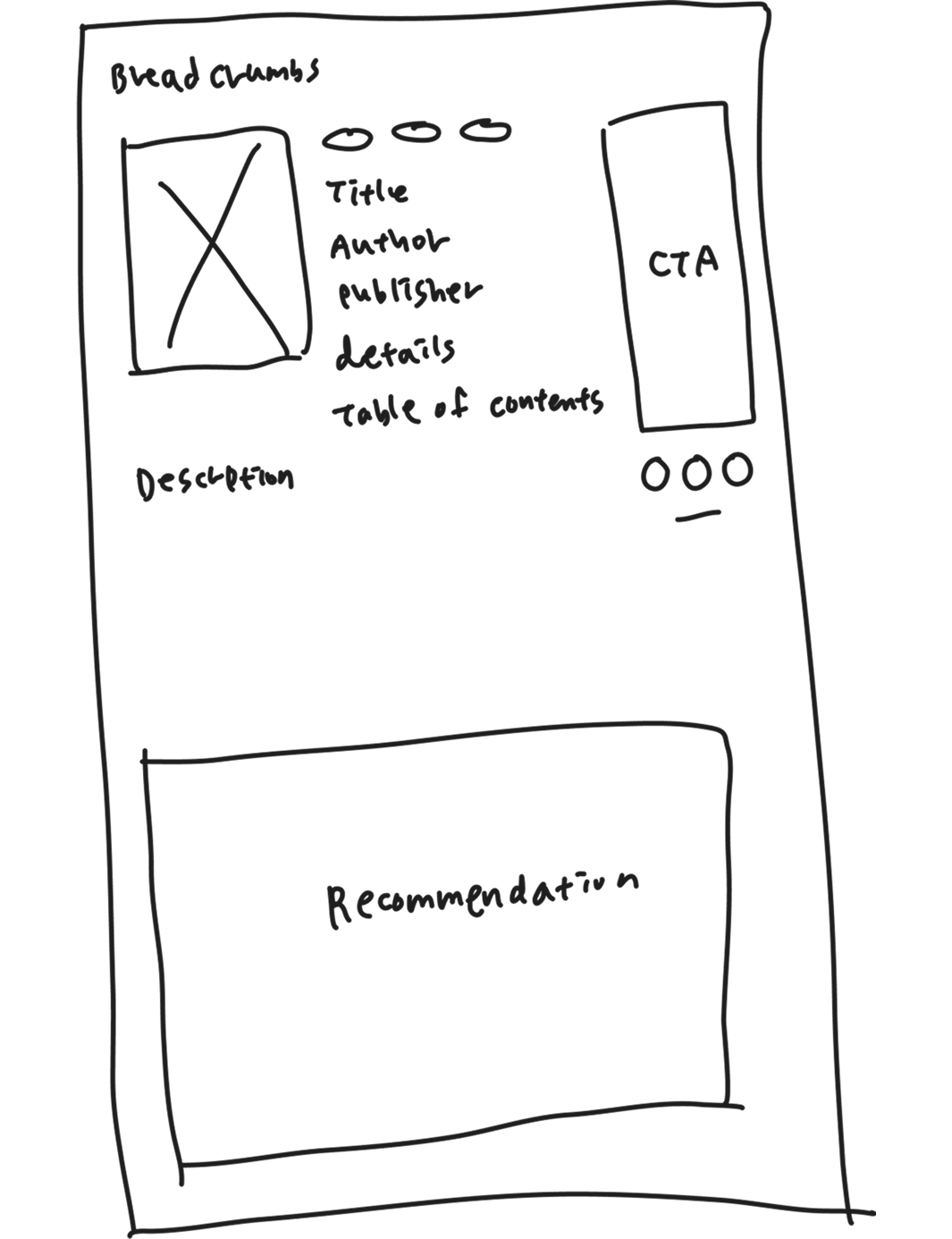
Anatomy of detail pages
Most pages share one basic three-section structure, with minor variations.
Top
Breadcrumbs
Main section
Thumbnail, title, author, technical details, description, wishlist, share, ToC, CTA
Recommendation
By authors, modules, personalized
02
Options live in the CTA
Sites with multiple plans surface them directly in the buttons, not buried.
[ format options + CTA, dashed crop ]
Exploration

Comparing page layouts, then CTA structures

The research narrowed it to two questions: how to structure the page, and what shape the CTA takes. I worked them in that order.

01Page structure

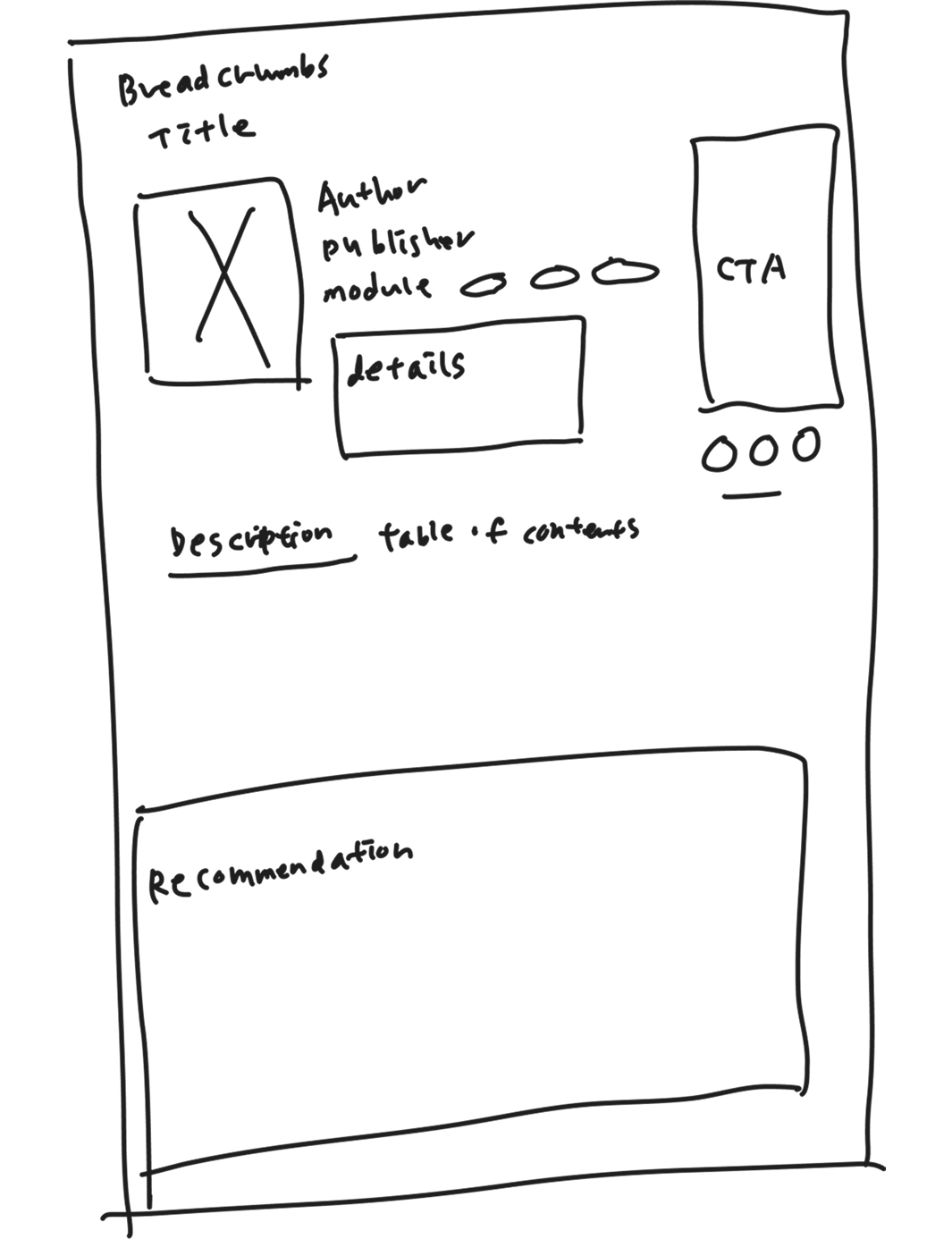
I chose Option C: the least dense layout, with cleaner detail and CTA areas, accepting scattered buttons I'd consolidate next. A and B both crowded the CTA and details.
Option A
Details-first
+Unified button location
CTA overcrowded with buttons
Crowded detail area
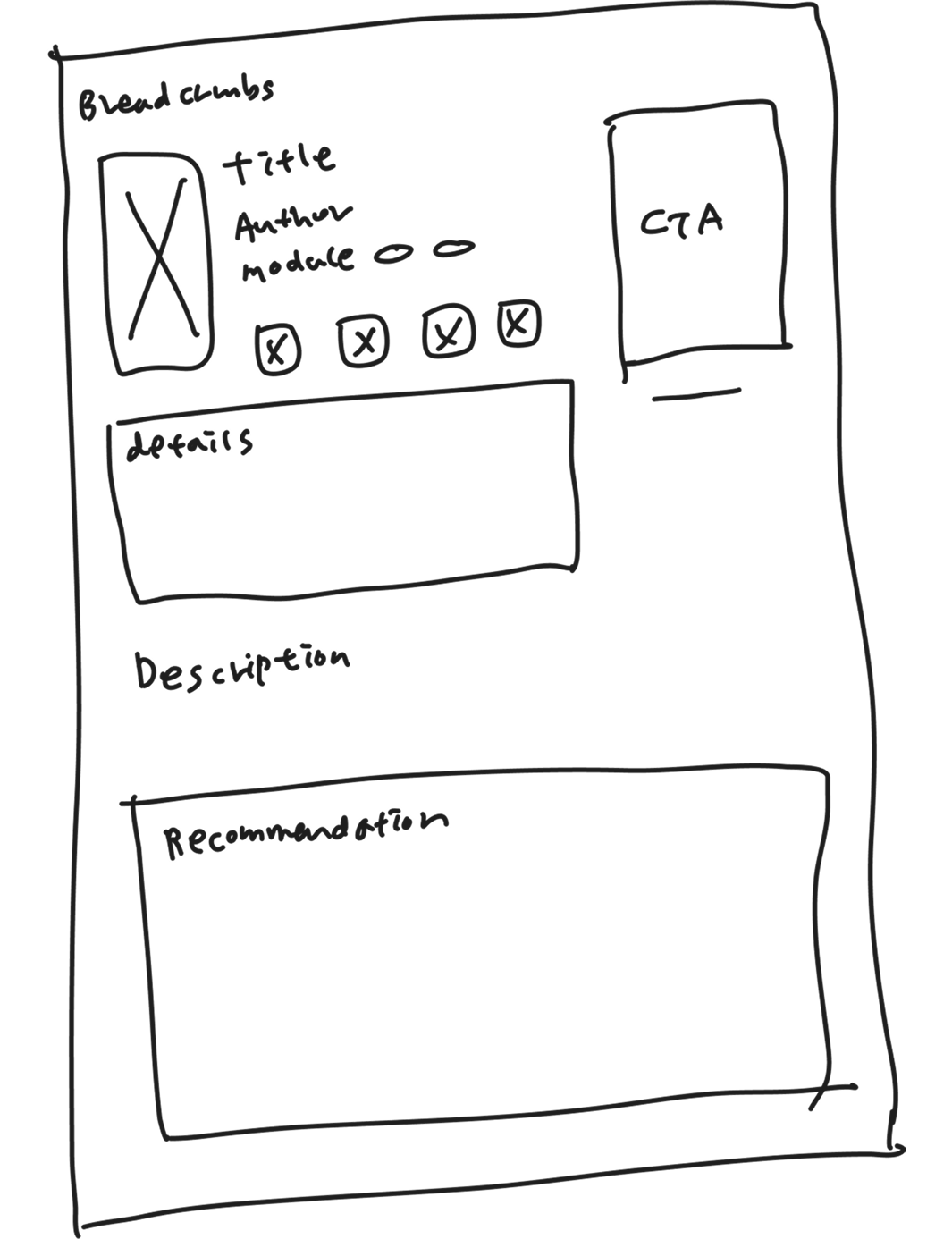
Option B
Roomy title + clear structure
+Title area fits long titles
+Less focus on module tags
CTA still overcrowded
Cluttered details
Table of contents hidden
Option CChosen
Split CTA
+Less dense details
+Less dense CTA
Buttons scattered, hard to find

02CTA shape

For holding all 6 plans I compared three structures: a dropdown, tabs, and stacked blocks. Dropdown and tabs both hid options again, so stacked blocks won: everything stays visible and comparable. I developed its details in the solution.

Iteration

Making complex pricing scannable

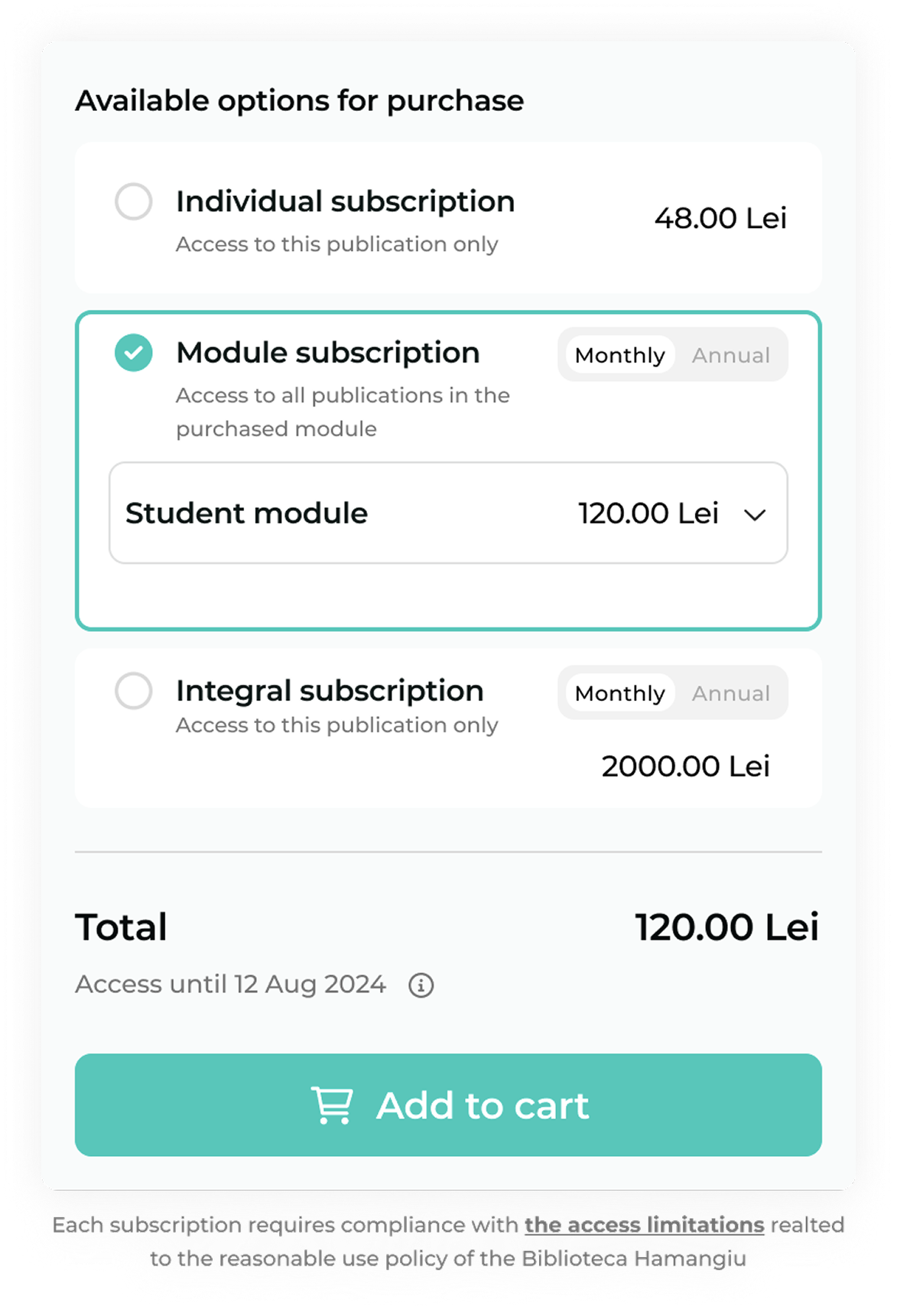
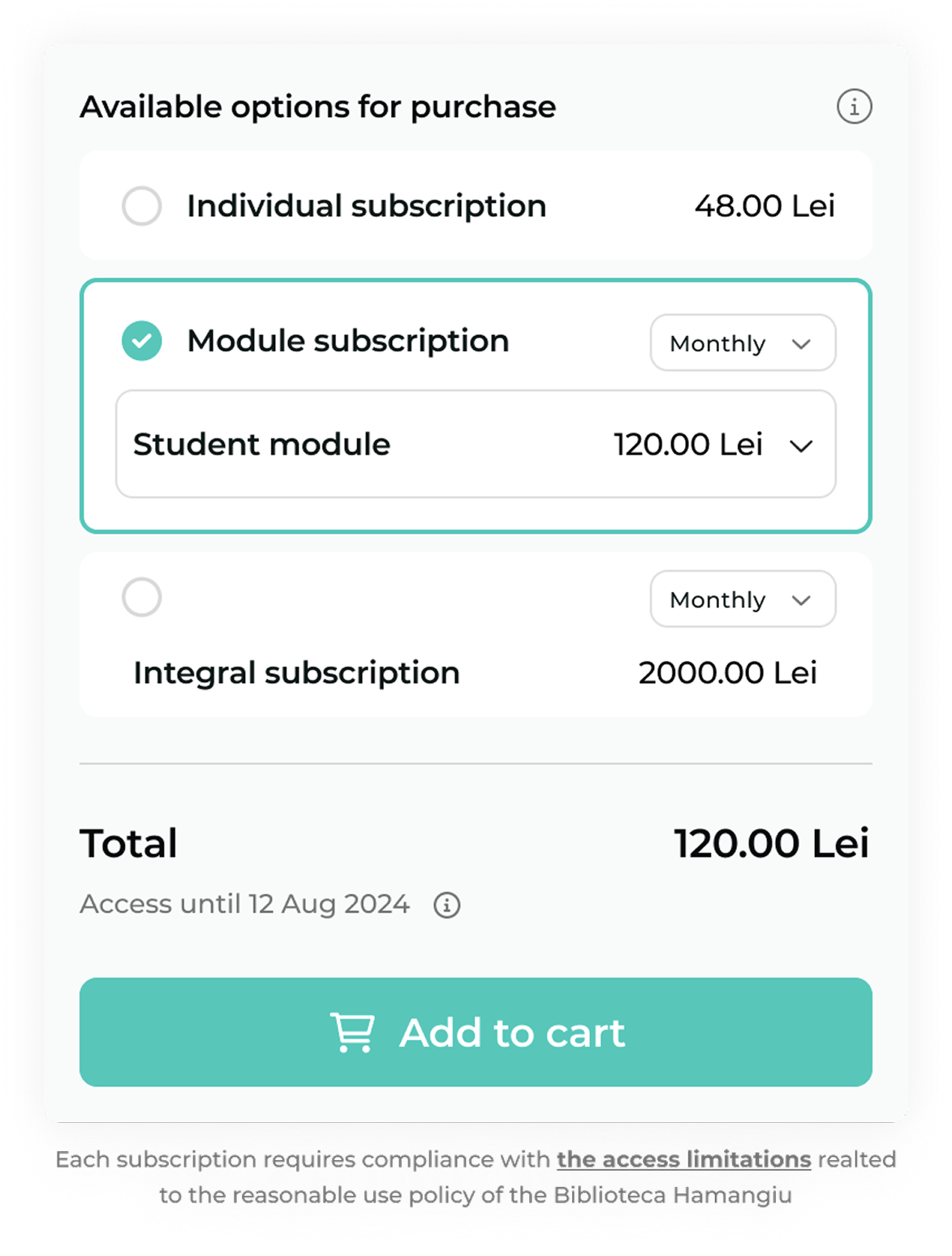
Three moves made the 6-way matrix readable top to bottom:

  • Blocksseparate each purchase option.
  • Toggleputs monthly and annual on equal footing.
  • Contraston title and price guides the eye.
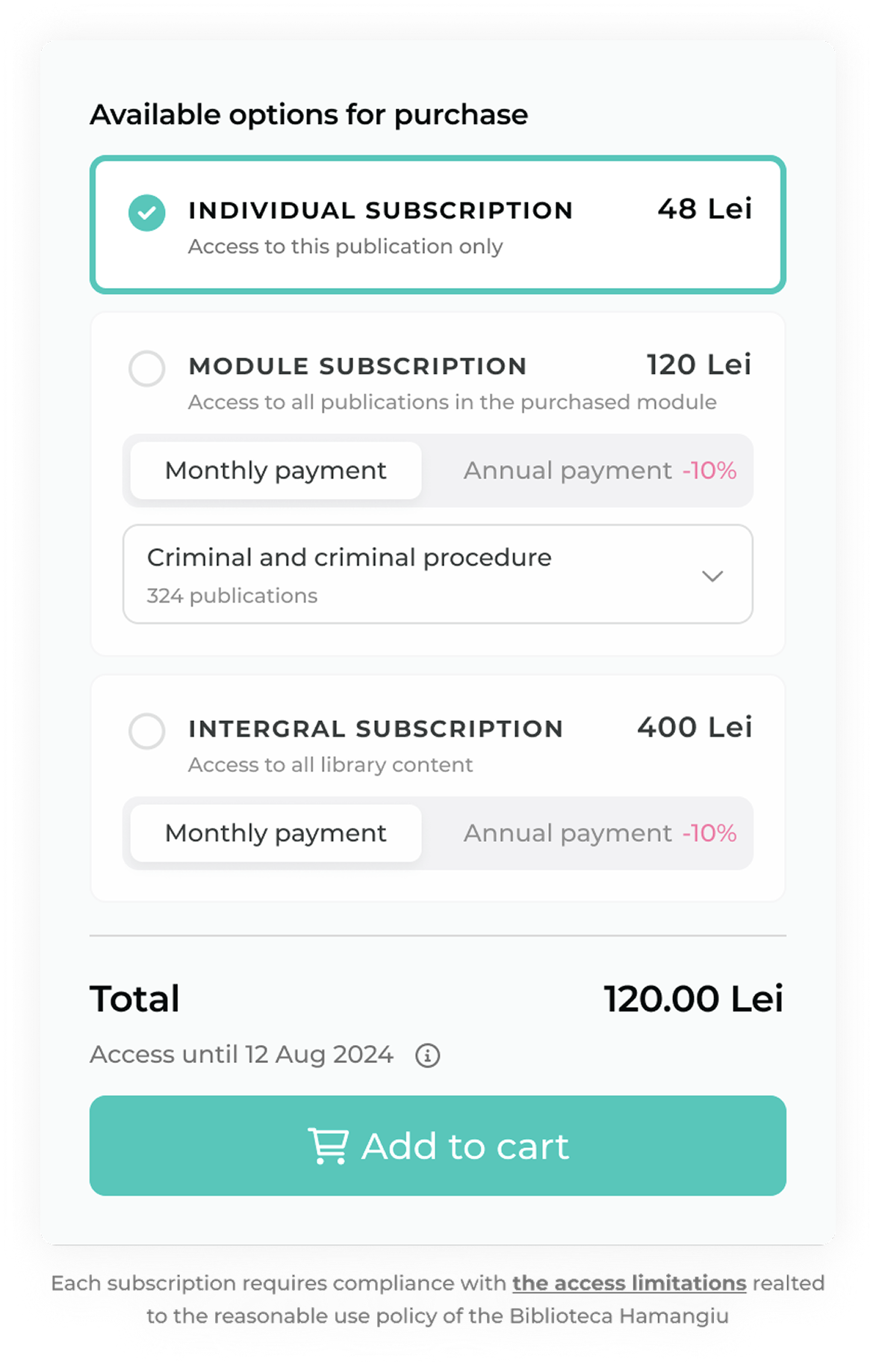
[ first idea ]
First idea
Hover to reveal
Explanation only on hover
[ 1st iteration ]
1st iteration
Always visible
Explanation shown inline
Toggle for monthly / annual
[ 2nd iteration — final ]
2nd iterationFinal
Refined for clarity
Bigger, easier toggle
Clearer “payment” label
Outcome

Half the clicks, options no longer hidden

The redesign shipped to desktop, cutting purchase from 4 clicks to 2 and surfacing pricing that used to be buried.

[ CTA — final, mobile ]
Interactive prototype
What's Next

What I'd measure now it's live

The problem was drop-off, so that's the first number I'd watch.

Drop-off rate · fewer people leaving without buying
Conversion rate · decisions turning into purchases
Annual-plan sales · did the toggle lift them
Reflection

What I'd carry forward

Make the most of limited research
No real users to test with, so I ran usability sessions with co-workers instead of skipping it.
Simplicity is the hardest part
Turning a 6-way pricing matrix into one scannable CTA was the real design work, not decoration.